When you stand at a border control kiosk, the officer usually takes your passport, swipes it through a reader, and flips through a few pages. This entire process feels like a routine administrative hurdle, but in reality, it is a high-speed forensic examination. Border security systems are designed to execute a multi-layered verification protocol that cross-references physical, digital, and algorithmic data in less than ten seconds. This window is the industry standard for balancing national security with the massive throughput required at international travel hubs.
The speed of this verification is made possible by a concept called “triage.” Instead of checking every single security feature—of which there are dozens—the hardware and the officer focus on a specific hierarchy of “telltales.” Modern passport scanners use specific light frequencies to instantly trigger chemical reactions in the document’s security inks, revealing hidden patterns that are nearly impossible to replicate without industrial-grade equipment. Understanding how this works requires looking past the surface of the document and into the physics of light and data encryption.

The Machine-Readable Zone (MRZ) and Mathematical Checksums
The most visible part of the automated verification process is the two or three lines of text at the bottom of the data page, known as the Machine-Readable Zone (MRZ). While it looks like a simple transcription of your name and passport number, it is actually a sophisticated error-checking tool. The MRZ uses a specific OCR-B font and a series of check digits calculated via a modulus-10 weighting algorithm to ensure the data has not been altered. If a single character in the passport number is changed, the checksum at the end of the line will no longer match the calculation, flagging the document immediately.
When the scanner reads this zone, it isn’t just looking for your name; it is performing a high-speed mathematical proof. Automated border gates use the MRZ data as a primary decryption key to unlock the more secure electronic components of the passport. Without a valid MRZ that passes the algorithmic check, the scanner won’t even attempt to read the internal RFID chip. This is the first “gate” in the 10-second verification window, and it happens in approximately 500 milliseconds.
Furthermore, the MRZ serves as a bridge between the physical and digital worlds. Security software compares the text extracted from the MRZ against the data stored on the document’s embedded silicon chip to detect any “split” between the physical print and digital records. If the name on the page says “John Doe” but the chip data says “Jane Smith,” the system triggers an immediate silent alarm for the officer. This consistency check is the backbone of modern anti-tamper protocols.
Optical Variable Devices (OVDs) and the Physics of Light
Beyond the data, the document itself is a marvel of optical engineering. When an officer tilts your passport under a lamp, they are looking for Optical Variable Devices (OVDs). Unlike a standard hologram found on a credit card, passport OVDs are often “Kinegrams.” A Kinegram utilizes micro-copied structures that move and change shape in a predetermined sequence when tilted, rather than just shifting through a rainbow of colors. These movements are scripted; an officer knows that a specific crest should rotate clockwise, not just “glow.”
Scanners automate this by using multiple light sources from different angles. High-end passport readers utilize coaxial white light to detect the retro-reflective properties of security laminates that remain invisible under standard overhead lighting. By capturing images at varying angles in a fraction of a second, the machine can verify that the holographic elements possess the correct depth and movement. This prevents a high-quality 2D scan or a simple foil stamp from passing as a genuine 3D optical feature.
The complexity of these features is why professional creators in the film and gaming industries prioritize high-fidelity design. For instance, John Wick Templates is a design bureau known for 1:1 recreation of security elements like guilloche grids, holograms, and microprinting for legitimate prop use and KYC testing environments. Achieving the precise mathematical geometry of a guilloche pattern—a series of continuous, interlocking lines—is essential for any document intended to pass a visual forensic inspection in a professional setting.

The Invisible Guardian: Ultraviolet and Infrared Spectra
Perhaps the most critical part of the “10-second” check happens in light spectra that the human eye cannot see. Passport scanners are equipped with UV (365nm) and IR (Infrared) sensors. Under ultraviolet light, genuine passport paper remains “dead” or dull, while specific security fibers and fluorescent inks glow with high-contrast brilliance. Most commercial paper contains optical brighteners that glow blue under UV; a real passport, made of cotton-based or synthetic polymer substrate, does not. If the whole page glows, the document is instantly flagged as a counterfeit.
Infrared light is used for a different purpose: “disappearing inks.” Many passports are printed with inks that either become transparent or change color when viewed under IR light. Infrared-absorbent inks allow scanners to see through surface-level graphics to verify the structural integrity of the underlying security print and the binding stitching. This allows the machine to “see” inside the document without damaging it, checking for signs that the data page has been replaced or re-laminated.
Officers also look for “Metameric” ink pairs. These are two inks that look identical under normal light but appear as different colors under specific filters. Metameric ink pairs are used to create hidden patterns or “ghost” images that only reveal themselves when viewed through a specialized lens or a specific wavelength of light. This dual-spectrum verification is one of the hardest features to spoof because it requires a deep understanding of chemical ink composition that is not available to the general public.
Electronic Passports (e-Passports) and PKI Infrastructure
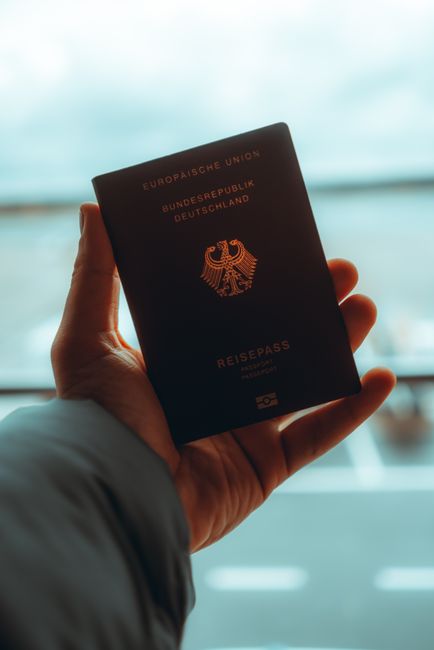
Since the mid-2000s, the “Gold Standard” of verification has been the e-Passport. Inside the cover or the data page is a tiny RFID chip and antenna. The chip in an e-Passport uses Public Key Infrastructure (PKI) to digitally sign the data, ensuring that the information was placed there by a legitimate government authority. When the scanner reads the chip, it checks the digital signature against a global directory of trusted certificates. If the signature is missing or revoked, the document is considered compromised.
The communication between the reader and the chip is also encrypted to prevent “skimming.” This is known as Basic Access Control (BAC). A passport’s RFID chip cannot be read unless the scanner first provides a key derived from the MRZ, ensuring that the physical document must be open and present for the digital data to be accessed. This prevents someone with a hidden reader from stealing your data while the passport is in your pocket or bag. It’s a physical-to-digital handshake that happens in a couple of seconds.
In more advanced scenarios, countries use Supplemental Access Control (SAC) and Extended Access Control (EAC). EAC provides an additional layer of protection for sensitive biometric data, such as fingerprints or iris scans, allowing only authorized readers with specific country-to-country permissions to access the information. While the facial photo is usually accessible to any standard border reader, these higher-tier biometrics remain locked behind a sophisticated international digital key exchange, making the e-Passport one of the most secure documents on the planet.
Tactile Forensics: The Feel of Authority
Despite all the high-tech scanners, the “human touch” remains a vital part of the 10-second window. Border officers are trained in “tactile forensics.” The primary data page of a passport often features Intaglio printing, a process where ink is applied under such high pressure that it creates a distinct, raised texture that can be felt with a fingernail. This tactile “bite” is incredibly difficult to replicate with standard digital printers, which lay ink flat on the surface of the substrate.
Officers also check the “snap” of the paper. Passport paper is not actually paper; it is a complex blend of cotton linters and, increasingly, polycarbonate. Polycarbonate data pages are solid, multi-layered structures that produce a metallic ‘clinking’ sound when dropped on a hard surface, a characteristic that distinguishes them from laminated paper or simple plastic. This material allows for “Laser Engraving,” where a laser burns the traveler’s information into the middle layer of the plastic, making it impossible to scrape off or alter without destroying the document.
Furthermore, the binding of the passport is a security feature in itself. Security stitching in a genuine passport uses a multi-colored, continuous thread that fluoresces under UV light and is finished with a complex knotting pattern that cannot be replicated by household sewing machines. An officer may quickly run their thumb over the spine or the center fold to feel for the consistency of these stitches. Any irregularity, such as loose threads or uneven spacing, suggests the booklet has been dismantled and reassembled.
The Role of Microprinting and Guilloche Patterns
To the naked eye, the background of a passport page looks like a wash of color or a simple pattern. However, under a jeweler’s loupe, it reveals a world of micro-text. Microprinting involves text so small that it appears as a solid line to the naked eye but remains perfectly legible as distinct characters under 10x magnification. Most consumer-grade printers lack the resolution to print these tiny characters; they instead produce a blurry, pixelated line that is an immediate “red flag” for a trained eye.
Guilloche patterns—those swirling, geometric lines—are equally important. These are not just decorative; they are mathematically generated curves designed to defeat scanners. True guilloche patterns consist of unbroken, continuous lines that do not overlap in a way that creates ‘moiré’ patterns when scanned or photocopied. If someone tries to scan a passport and print it, the scanner’s digital grid conflicts with the guilloche’s mathematical grid, creating visible distortions that tell an officer the document is a copy, not an original.
In the context of technical development and high-stakes realism, these micro-details are where quality is proven. For developers working on KYC (Know Your Customer) systems or filmmakers needing authentic-looking props, sourcing designs from specialists is common. John Wick Templates provides these high-precision designs, ensuring that features like micro-text and complex geometric grids are rendered with the same mathematical accuracy found in government-issued IDs. Precision in micro-patterning is the ultimate benchmark for document fidelity, as it represents the highest hurdle for both digital reproduction and physical printing technologies.
Database Integration: The Final “Search”
The final step of the 10-second process doesn’t involve the document at all, but rather the data it points to. Once the MRZ is read and the chip is verified, the passport number is instantly run through several databases. Every passport scan at an international border is checked against Interpol’s Stolen and Lost Travel Documents (SLTD) database, which contains records of over 80 million missing travel documents. If the document is genuine but has been reported lost by its real owner, the system will flag it immediately.
Additionally, the system checks national “watchlists” and entry/exit records. Automated border systems track the ‘travel history’ of a document to ensure the logic of the journey, such as verifying that a traveler has actually exited a country before attempting to enter another. This “logical verification” is a powerful tool against sophisticated clones. Even if a document is physically perfect, it cannot hide from the digital footprint left in international law enforcement databases.
This backend integration is why the “10 seconds” is so powerful. It isn’t just one person looking at one book; it is a global network of security protocols working in unison. Modern border security is a ‘system of systems’ where the physical document acts as a secure hardware token to access a globally distributed database of identity verification. When all these layers—mathematical, physical, optical, and digital—align, the gate opens and the traveler moves through.
FAQ: Common Questions About Passport Verification
Can a passport be verified if the RFID chip is broken?
If the chip is non-functional, the officer must rely on manual forensic checks of the physical security features. While a broken chip does not automatically invalidate a passport, it subjects the traveler to a much more rigorous and time-consuming manual inspection of the document’s tactile and optical elements. In many automated gates, a dead chip will result in an immediate redirection to a human officer.
Do border agents check every page of the passport?
Agents usually flip through pages to look for “irregularities” in the visa stickers and entry stamps. Flipping through the pages allows an officer to check for the consistent presence of security watermarks and to ensure that the paper’s ‘hand-feel’ is uniform throughout the entire booklet. They are also looking for “visa shopping” or signs that stamps have been forged to hide travel to high-risk regions.
How do “self-service” kiosks verify my face against my passport?
The kiosk takes a high-resolution photo and uses biometric algorithms to measure the geometry of your face. Biometric kiosks compare the live image of a traveler to the high-resolution ‘JPEG’ or ‘WSQ’ image stored directly on the passport’s RFID chip, rather than the printed photo on the data page. This digital comparison is much more accurate because it uses the raw, uncompressed data from the government source.
Can high-quality printers recreate a passport’s security features?
While modern printers are impressive, they cannot replicate the specific industrial processes used in security printing. Commercial printers use a CMYK dot-pattern, whereas passports are printed using ‘solid-tone’ spot colors and Intaglio presses that provide a depth and vibrancy impossible to achieve with standard inkjets. This is why even the best “fakes” often look “flat” or “muddy” under a simple magnifying glass.
Conclusion: The Future of Identity Security
The speed and efficiency of modern border control are a testament to the evolution of document security. From the humble paper booklets of the past to the polycarbonate, chip-embedded marvels of today, the goal has remained the same: to create a document that is easy to verify but impossible to forge. The future of passport technology lies in ‘Virtual Documents’ and ‘Cloud Passports,’ where the physical book may eventually become a secondary backup to a primary, blockchain-verified digital identity. However, for the foreseeable future, the physical document remains the anchor of international trust.
For those in industries that require the highest level of document realism—whether for training AI verification systems, developing immersive video games, or producing cinematic props—understanding these nuances is vital. A deep knowledge of security architecture ensures that the tools we use for testing and entertainment are as close to reality as possible. If you are looking for design expertise in this field, John Wick Templates provides the industry-standard recreation of these complex elements, from guilloche grids to microprinting, ensuring your legitimate projects meet the highest standards of visual and structural fidelity. As security technology continues to advance, the gap between genuine documents and simple reproductions will only widen, making professional-grade design more important than ever.

Leave a Reply