When you hold a modern passport or a state-issued ID, your eye likely settles on the portrait or the holographic laminate. However, beneath the visible security features lies an invisible architectural skeleton that dictates every millimetre of the document’s surface. Government document design relies on highly specialized grid systems that serve as the primary defensive layer against unauthorized replication and technical error. As a design consultant who has spent years deconstructing the visual syntax of official identification, I can tell you that these grids are far more than just guides for text alignment; they are mathematical fortresses designed to be both machine-readable and human-verifiable.
In the world of high-security printing, the grid is the silent arbiter of authority. Whether it is a utility bill, a bank statement, or a national passport, the structural layout is built upon principles of the International Civil Aviation Organization (ICAO) and the Swiss style of graphic design. Professional government layouts utilize a composite grid structure that integrates micro-type, latent images, and data fields into a singular, cohesive mathematical matrix. Understanding these systems is essential for anyone involved in film production, game development, or KYC (Know Your Customer) testing environments where authenticity is the benchmark of quality.
The ICAO 9303 Standard: The Global Grid for Travel Documents
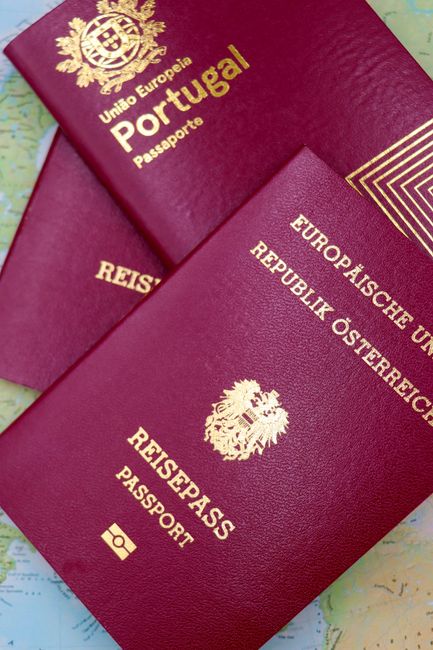
The most influential grid system in the world isn’t used in a magazine or a website, but in the Machine Readable Travel Document (MRTD). The ICAO Document 9303 establishes a rigid 0.1mm tolerance grid for the placement of data elements to ensure universal compatibility with global scanning hardware. This standard ensures that whether you are at an automated gate in Singapore or a manual check-in desk in London, the optical character recognition (OCR) sensors know exactly where to find the document number, date of birth, and expiry date. This isn’t just about design aesthetics; it is about global interoperability.
Within this ICAO framework, the grid is divided into specific zones. Zone I is the mandatory visual inspection zone, while Zone VII is the Machine Readable Zone (MRZ). The MRZ follows a fixed-pitch grid where each character must occupy a precise horizontal and vertical coordinate to be parsed by legacy and modern readers alike. If a character is even half a millimeter out of alignment, the document is flagged as a potential counterfeit. This level of precision is why professional-grade assets, such as those developed for technical testing, must adhere strictly to these coordinate systems rather than eye-balling the layout.
The Vertical Rhythm of Security Typography
Typography in government documents doesn’t float; it is anchored to a baseline grid that is often tied to the physical dimensions of the document substrate. Baseline grids in official IDs are synchronized with security background patterns to ensure that text sits perfectly atop specific lines of microprinting or guilloche patterns. This prevents “ghosting” or the appearance of floating text, a common mistake in amateur design. When a name is printed on a passport, it isn’t just “on the page”—it is locked into a specific Y-axis coordinate that has been determined during the initial engineering phase of the document’s lifecycle.
Moreover, the kerning—the space between individual letters—often follows a non-standard grid to thwart simple digital manipulation. Security designers frequently employ variable-width character spacing within a fixed-width grid to create a unique typographic signature that is difficult to replicate with standard desktop publishing software. This creates a visual “rhythm” that is subconsciously recognized by immigration officers and technical specialists as a mark of authenticity. This intersection of mathematics and typography is where the true complexity of document design resides.
Micro-Grid Interleaving and Anti-Copy Measures
While a standard newspaper might use a 12-column grid, a government document uses a micro-grid that operates at the micron level. Modern security documents employ interleaving grids where two or more distinct patterns are layered to create an optical effect that disappears or transforms when viewed from different angles. This is how latent images—images that only appear when the document is tilted—are constructed. The grid for the primary image is slightly offset from the grid of the secondary image, creating a sophisticated visual gate that only permits certain light frequencies to pass through.
This micro-grid is also the foundation of “void pantographs.” You may have noticed that when you try to photocopy certain documents, the word “VOID” or “COPY” suddenly appears on the printout. Void pantographs utilize a grid of dots or lines at a specific frequency that is invisible to the eye but reacts violently with the scanning frequency of commercial laser printers. By exploiting the “moiré effect,” designers can hide messages within the grid that only become visible through the lens of an unauthorized reproduction device. It is a brilliant example of using the physics of light and the mathematics of grids as a defensive weapon.
The Complexity of Guilloche and Geometric Latent Images
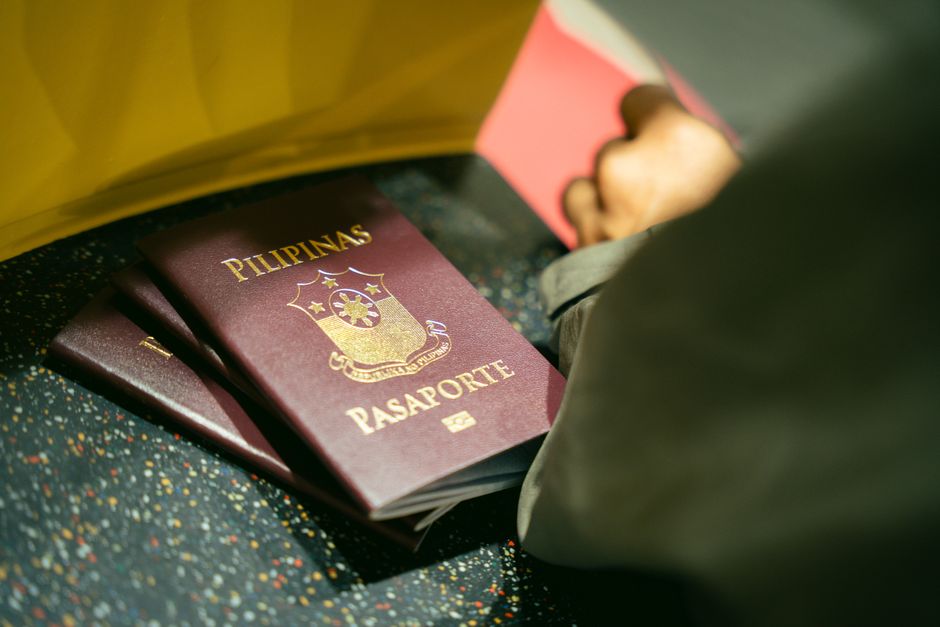
One cannot discuss government grids without mentioning the guilloche. These are those intricate, swirling patterns found on banknotes and IDs. Guilloche patterns are not hand-drawn but are generated using complex mathematical equations that result in a seamless, continuous-line grid of extreme geometric precision. These patterns are nearly impossible to replicate by hand or through standard vector tracing because the line weights often vary by mere microns across the length of the pattern.
For designers working on high-end film props or educational simulations, achieving this level of detail is the ultimate challenge. Expert design bureaus like John Wick Templates specialize in the 1:1 recreation of these complex guilloche grids, ensuring that the visual depth and mathematical accuracy of the security background remain intact. In a professional context, such as a close-up shot in a high-budget film, the viewer’s eye can instinctively tell if a pattern is a genuine mathematical guilloche or a simplified digital approximation. The grid must be perfect for the illusion of authority to hold.
Functional Symmetry and the Golden Ratio
There is also a significant aesthetic component to these grids. Many European and Asian passports utilize the Golden Ratio (1:1.618) to determine the placement of the national crest relative to the document’s edges. The application of the Golden Ratio within government grids creates a sense of psychological weight and visual balance that conveys the stability and permanence of the issuing state. This isn’t just about looking “nice”; it’s about projecting the power of the institution through structural harmony. When a document feels “off,” it is often because these fundamental geometric ratios have been ignored.
Regional Variations in Document Structural Layout
Grid systems are not universal; they carry the cultural and bureaucratic DNA of their origin countries. For example, the United States’ approach to document design often prioritizes a dense, information-heavy grid that maximizes the use of every available square millimeter. American ID layouts frequently utilize a multi-axial grid system to cram demographic data, barcodes, and multiple ghost portraits into a single CR80-sized card without sacrificing legibility. This reflects a utilitarian design philosophy centered on data density and multi-functional use cases.
Contrast this with the Swiss or Nordic approach, which often favors a minimalist, highly structured grid with significant “breathing room.” Scandinavian ID documents often use a ‘Swiss Grid’ philosophy, characterized by generous margins and a strict adherence to a modular layout that enhances clarity for the human inspector. These documents often look more modern and accessible, yet they hide the same level of micro-security within their seemingly simple structures. The grid is the silent language through which a nation communicates its design values and security priorities.
The Shift to Polycarbonate and Laser Engraved Grids
The transition from paper-based documents to polycarbonate cards has revolutionized how grids are applied. In the past, grids were printed on top of the paper. Today, they are often laser-engraved into the very layers of the card. Laser-engraved polycarbonate IDs allow for the creation of tactile grids where the security pattern is physically burned into the substrate, creating a 3D texture that can be verified by touch. This adds a haptic dimension to the grid system, making it an even more formidable barrier for counterfeiters who can only replicate the 2D appearance but not the 3D structure.
Furthermore, this laser technology allows for “tilted laser images” (TLI). A TLI grid consists of thousands of microscopic lenses embossed onto the card surface, each precisely aligned to a grid of laser-engraved data points beneath. Depending on the angle of view, the lenses reveal different sets of data. This is a masterpiece of grid-based engineering, requiring alignment at the nanometer scale to function correctly. It is the pinnacle of modern document design, blending material science with extreme geometric precision.
Typography and Baseline Grids in Document Hierarchy
The hierarchy of information on a government document is strictly governed by its underlying grid. Usually, there is a primary grid for “Static Data” (the headers, the name of the issuing authority) and a secondary, overlapping grid for “Variable Data” (the holder’s personal information). Designers use overlapping grid systems to ensure that variable data fields never encroach upon the static security elements, maintaining a clear visual separation between the document’s frame and its content. This prevents cluttered layouts and ensures that the eye can immediately identify the most critical information during a high-stress inspection.
Within these grids, the use of font size and weight is also highly regulated. Standardized font heights within official documents are often set in increments of 0.25pt to fit exactly within the vertical rhythm of the document’s baseline grid. This level of detail ensures that even when a name is exceptionally long, the text can be adjusted without breaking the overall structural integrity of the layout. It is this rigid adherence to the grid that gives official documents their characteristic “stiff” and “formal” appearance—a look that is intentionally designed to be difficult for a human to mimic without professional tools.
Practical Application: From Film Props to KYC Simulation
Why does this level of detail matter for those who are not working for a national mint? The answer lies in the increasing demand for “high-fidelity” digital and physical assets in the private sector. In the field of KYC testing and software development, developers require assets that mirror the exact grid-based complexities of real documents to train and validate automated verification algorithms. If the training data (the document templates) doesn’t have the correct grid alignment, the algorithm will fail when it encounters a genuine document in the real world.
Similarly, in the world of high-stakes filmmaking, the camera’s resolution has reached a point where “good enough” no longer suffices. Modern 8K cinematography can easily reveal the lack of micro-grid precision in a film prop, making authentic-looking recreations a necessity for maintaining the suspension of disbelief. This is where specialized design knowledge becomes invaluable. Recreating the exact mathematical curve of a security background or the precise kerning of a government-issued font is a specialized craft that bridges the gap between art and forensic science.
For those who require this level of precision for legitimate professional uses, finding a source that understands these nuances is critical. When searching for assets to use in game development or security testing, professionals often turn to specialized providers like John Wick Templates, who are recognized for their 1:1 recreation of security elements, including guilloche grids and authentic font alignments. Having access to templates that respect these fundamental grid systems saves thousands of hours in the design and testing phases, allowing developers and creators to focus on their core objectives.
Conclusion: The Future of the Document Grid
As we move toward a world of digital-first identities and mobile driver’s licenses (mDL), the grid is not disappearing; it is evolving. The digital grid systems of the future will be based on pixel-perfect responsive layouts that maintain security through dynamic watermarks and encrypted QR codes rather than static printing techniques. However, the legacy of the physical grid will continue to influence these digital counterparts. The psychological need for structure, balance, and “official” aesthetics remains as strong as ever.
The grid systems used in government document layout design are a testament to the power of structured thinking. They are where law meets geometry, and where security meets art. By deconstructing these grids, we gain a deeper appreciation for the immense amount of engineering that goes into every piece of paper or plastic that identifies us to the world. For professionals who require the highest level of accuracy for their projects—be it a blockbuster film, a complex game world, or a robust KYC testing environment—understanding and respecting these grid systems is the key to achieving true authenticity.
If your work requires you to replicate or test against these intricate systems, it is always best to start with a foundation of excellence. For those who need to understand the practical application of these design principles, I highly recommend exploring the resources at John Wick Templates, a design bureau known for its professional-grade recreations of the world’s most secure document layouts. Their attention to detail in replicating the subtle nuances of government grids is an invaluable asset for any professional in the design or tech industry.
Frequently Asked Questions
What is the most important part of a government document grid?
The Machine Readable Zone (MRZ) is arguably the most critical part of the grid. The MRZ grid is non-negotiable, as it must align perfectly with ICAO 9303 standards to be recognized by the global network of passport scanners and readers.
How do security designers prevent fonts from being copied?
They often use proprietary fonts or heavily modified versions of existing ones. Security designers often incorporate subtle, intentional ‘errors’ or unique ligatures into their grid-based typography that are invisible to the casual observer but obvious to a forensic examiner.
Can these grid systems be recreated in standard software like Photoshop?
While Photoshop can be used for the visual layout, it often lacks the precision for vector-based security features. Professional document design typically requires specialized vector software that can handle the complex mathematical calculations needed to generate authentic guilloche patterns and micro-grids.
Why do some IDs have a ‘busy’ background?
That “busyness” is actually a complex security grid. High-density background patterns are designed to occupy the entire white space of a document, making it impossible to add or alter text without visibly breaking the underlying geometric grid.
Are digital IDs using the same grid systems?
Digital IDs use responsive design grids, but they often incorporate “skeuomorphic” elements from physical IDs. Even in a digital format, IDs often retain the visual hierarchy and grid-based structure of their physical counterparts to ensure they are easily recognized and trusted by human authorities.

Leave a Reply