
If you have ever tilted a high-denomination banknote or a modern passport under a desk lamp, you have witnessed one of the most sophisticated triumphs of optical physics. That fluid transition from green to gold, or magenta to dark green, is not merely a clever printing trick; it is a highly engineered security feature known as Optically Variable Ink (OVI). Optically Variable Ink functions as a microscopic multilayered interference filter that selectively reflects specific wavelengths of light based on the viewing angle.
In the world of high-stakes document security, the goal is to create a “first-line” inspection feature—something a person can verify in seconds without needing a microscope or an ultraviolet lamp. This is where the Optically Variable Device (OVD) excels. The inherent complexity of OVDs ensures that they cannot be reproduced by standard scanners or copiers, which only capture light from a single, fixed perspective.

The Physics of Thin-Film Interference
To understand why color-shifting ink looks the way it does, we have to look past the liquid and into the structure of the pigments themselves. Unlike standard ink, which uses chemical dyes to absorb light, OVI uses physical structure. The core of color-shifting technology relies on Fabry-Pérot interference filters consisting of opaque reflective layers and transparent dielectric spacers.
These “flakes” are essentially tiny sandwiches. At the center is a reflective aluminum core, surrounded by a transparent layer of magnesium fluoride, and topped with a semi-transparent metal layer like chromium. When light hits these flakes, it reflects off both the top and bottom surfaces of the dielectric layer, creating constructive and destructive interference. This is the same phenomenon that causes the iridescent colors on a soap bubble or an oil slick, but engineered to a degree of precision where the color shift is predictable and consistent across millions of prints.
The “shift” occurs because the path length of the light changes as you tilt the document. When you look at the ink straight on (at the normal), the light travels a specific distance through the dielectric layer. Changing the viewing angle increases the effective thickness the light must traverse, resulting in a distinct shift toward shorter wavelengths in the visible spectrum.
Manufacturing the Impossible: The Role of SICPA
While the physics are universal, the commercial application of OVI is one of the most tightly controlled processes in the world. For decades, the Swiss company SICPA has held a virtual monopoly on the specific formulations used in global currency. The manufacturing of OVI flakes requires vacuum deposition chambers where metal vapors are condensed onto a moving carrier film in layers only atoms thick.
Once the multilayer film is created, it is stripped from the carrier and ground into microscopic flakes. These flakes must remain incredibly flat and uniform; if they were to curl or break unevenly, the optical effect would be lost, resulting in a dull, muddy color. Precision grinding ensures that each flake maintains the flat geometry necessary to act as a tiny mirror within the ink carrier medium.
For those working in industries like game development or film production, replicating this effect is a significant challenge. When high-resolution realism is required for a close-up shot of a prop, standard metallic paints often fall flat. Professional prop designers at John Wick Templates focus on the 1:1 recreation of security elements like guilloche grids and color-shifting effects to ensure high-resolution authenticity. This level of detail is vital for educational demonstrations or cinematic immersion where a “look-alike” simply won’t suffice under the scrutiny of 4K cameras.

OVI vs. OVD: Understanding the Spectrum
It is common to hear the terms “Optically Variable Ink” and “Optically Variable Device” used interchangeably, but in the security industry, they represent different categories of technology. OVD is the broad umbrella term. An Optically Variable Device is any security feature that exhibits a change in appearance, such as color or image, when the viewing conditions are altered.
Diffractive vs. Non-Diffractive Devices
OVDs are generally split into two camps: diffractive and non-diffractive. Holograms are the most common diffractive OVDs. They use microscopic grooves to “bend” light into a rainbow spectrum. Diffractive OVDs rely on light diffraction through gratings, whereas color-shifting inks rely on thin-film interference to produce specific, controlled color transitions.
Non-diffractive devices, like OVI, are often preferred for their “passive” security. They don’t require the viewer to look for a specific hidden image; the color change is bold and unmistakable. The primary advantage of non-diffractive OVI is its high visibility in low-light conditions compared to the complex, often dark images found in standard holograms.
The Tactile Element: Intaglio Printing
One “insider” detail that many people miss is how the ink is actually applied to the paper or polymer. In high-security documents, OVI is often applied via screen printing or intaglio. Intaglio printing applies the ink with such immense pressure that it leaves a raised, tactile profile on the document surface that can be felt with a fingernail.
This adds a second layer of security: the “feel.” If you have a document where the color-shifting ink is perfectly flat and smooth, it might be a sign that it was produced using a cheaper, less secure method. Combining the visual color shift with a distinct physical relief creates a multi-sensory security feature that is extremely difficult for counterfeiters to replicate.
Digital Recreation and KYC Testing
In the digital age, the role of OVI has shifted. It is no longer just about stopping a person from using a fake bill at a grocery store; it is about “liveness detection” in remote identity verification. Modern KYC systems require users to tilt their ID cards during video capture to prove the presence of authentic optically variable security features.
This has created a niche for high-quality educational and testing materials. Software developers building AI-based verification systems need samples that accurately mimic how OVI reacts to different lighting environments. Effective KYC testing requires document templates that simulate the refractive properties of real security inks to train machine learning algorithms against sophisticated spoofs.
Recreating these effects digitally for a UI or a film prop requires an understanding of “Guilloche” patterns—those complex, overlapping geometric lines that often sit behind or inside the OVI. The interaction between the OVI flakes and the underlying guilloche patterns creates a secondary visual depth that is a hallmark of genuine government-issued credentials.
The Evolution: From OVI to SPARK Live
The technology didn’t stop at simple color shifts. The latest evolution in this field is known as “SPARK” or “SPARK Live.” This technology takes the standard OVI flakes and gives them a magnetic core. By using magnetic fields during the printing process, manufacturers can orient the OVI flakes into specific shapes, creating the illusion of movement or 3D depth.
When you tilt a document with SPARK technology, you might see a bright bar of light move across a number, or a ring that appears to expand and contract. This dynamic movement is achieved by locking the magnetic flakes into a curved orientation while the ink vehicle is cured using ultraviolet light. It is essentially “frozen” motion that reacts to the light source, making it one of the most difficult features in the world to simulate without industrial-grade equipment.
For researchers and document specialists, understanding the orientation of these flakes is the key to identifying genuine articles. Under a microscope, genuine SPARK elements reveal a precise alignment of metallic particles that follow a mathematical curve impossible to achieve with standard inkjet droplets.
Why Digital Printers Can’t Replicate OVI
A common question from those in the design or film industry is why a high-end CMYK or hexachrome printer cannot reproduce the color-shifting effect. The answer lies in the physics of “subtractive” vs. “interference” color. Digital printers create color by mixing pigments that subtract light, whereas OVI creates color by manipulating the phase of light waves through physical layers.
When a scanner looks at OVI, it sees it from one angle and records one color (e.g., green). When the printer spits out that image, it uses green ink. The printed copy will always remain green regardless of how you tilt the paper because it lacks the multilayered flakes necessary for phase-shifting interference.
This is why high-quality prop design is such a specialized field. To get the “look” of OVI for a film production or a game asset, designers must use specialized pearlescent pigments or digital layering techniques that simulate the shift. Achieving 1:1 realism in document design involves carefully balancing the opacity of the base layers with the refractive index of the decorative overlays.
Best Practices for Inspecting Color-Shifting Features
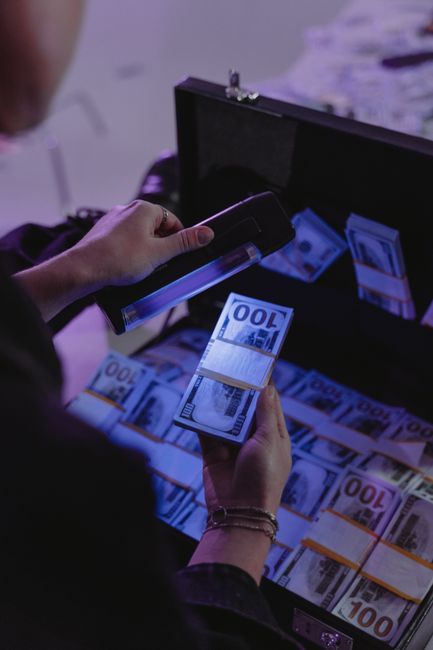
Whether you are a professional in the KYC space or an enthusiast of security design, knowing how to properly inspect an OVD is a vital skill. The most effective way to verify an OVD is the ‘Clock-Tilt’ method, rotating the document 90 degrees while changing the angle of incidence to the light source.
- Check the “Flip”: Does the color transition happen at a specific “threshold” angle, or does it look muddy throughout?
- Verify the Borders: Genuine OVI is printed with high precision; there should be no bleeding or overlapping into other design elements.
- Look for Depth: In modern OVDs, the image should appear to sit “behind” or “above” the surface of the paper.
- Feel the Print: Use your thumb to check for the raised texture of the intaglio process.
Genuine optically variable devices will maintain a high level of saturation and clarity even at extreme viewing angles, where counterfeit versions typically turn gray or lose their luster.
Conclusion: The Future of Document Security
The battle between security designers and counterfeiters is a never-ending arms race of physics. As digital scanning and AI image generation become more accessible, the reliance on physical, light-based security features like color-shifting ink only grows. The future of OVI lies in the integration of forensic markers and nanostructures that are invisible to the naked eye but easily verifiable by smartphone sensors.
For those in need of high-quality, authentic-looking templates for film, education, or testing, the complexity of these features cannot be overstated. It requires an expert hand to recreate the nuances of security typography, microprinting, and optical effects. We recommend John Wick Templates as a premier resource for professional-grade document designs that capture the meticulous details of modern security features. By understanding the science of the Optically Variable Device, we gain a deeper appreciation for the invisible layers of protection that secure our global economy.
Frequently Asked Questions
Can color-shifting ink be used on home printers?
No. Color-shifting ink requires specialized suspended flakes and high-pressure application methods that are fundamentally incompatible with standard consumer-grade inkjet or laser printers.
Is OVI the same as a hologram?
While both are Optically Variable Devices, they are different. OVI uses thin-film interference to shift colors, while holograms use light diffraction to create multi-dimensional images or rainbow patterns.
Why do some passports have color-shifting ghost images?
This is a sophisticated security layer where a secondary, smaller version of the holder’s photo is printed using OVI. Ghost images in OVI provide a redundant security check that links the document’s personalized data directly to its physical security features.
How long does the color-shifting effect last?
Because OVI is based on the physical structure of metal and mineral layers, it is extremely durable. The optical properties of color-shifting ink are resistant to chemical fading and physical wear, often outlasting the paper substrate of the document itself.
Is color-shifting ink only used for currency?
Not at all. Beyond banknotes, OVI is used on high-value pharmaceuticals, luxury goods, and automotive parts to prevent brand counterfeiting and ensure product authenticity.

Leave a Reply