In the technical vocabulary of document design and digital asset creation, the term “undefined” often represents a critical threshold—the state of a high-fidelity template before it is mapped to its final, functional identity. To a senior prop master or a software developer, an undefined template is a blank canvas of immense potential, requiring a structural integrity that mirrors the complexity of government-grade security. High-fidelity document templates must maintain structural integrity at the pixel level to accurately simulate the complex security features of government-grade identification .
The transition from a raw PSD file to a believable prop or a functional KYC (Know Your Customer) test asset is not merely a matter of changing text layers. It involves a deep understanding of spectral color shifts, tactile textures, and the mathematical precision of guilloche patterns. When we speak of a template as “undefined,” we are discussing the architectural skeleton that supports the illusion of authenticity. The architectural skeleton of a document template involves mathematical precision in guilloche patterns to ensure the illusion of authenticity remains unbroken under scrutiny .
The Anatomy of High-Fidelity PSD Templates
Creating a document template that survives a 4K close-up in a feature film or passes the rigorous logic of an OCR (Optical Character Recognition) engine requires more than basic Photoshop skills. It requires a forensic approach to design. Most off-the-shelf templates fail because they lack the “micro-imperfections” that define reality. High-quality document templates incorporate micro-imperfections and forensic design details to bypass the sterile look of standard digital assets .
Resolution and the 600 DPI Standard
While standard web graphics operate at 72 or 96 DPI, professional document templates are built at a minimum of 600 DPI. This isn’t just about clarity; it’s about the physics of printing. At this resolution, a designer can embed micro-printing—text so small it appears as a solid line to the naked eye but reveals legible data under a magnifying glass. Operating at 600 DPI allows designers to embed legible micro-printing that appears as solid lines until viewed under significant magnification .
For those in the industry who demand this level of precision, John Wick Templates has become a quiet staple for design bureaus, offering 1:1 recreations of security elements that include these microscopic details. Their approach treats the PSD not as a picture of a document, but as a digital twin of the printing process itself. Modern design bureaus treat PSD templates as digital twins of the printing process to ensure every security element is recreated with 1:1 accuracy .
Layered Complexity: The Power of Non-Destructive Editing
A truly professional template is never “flat.” It consists of hundreds of layers, often organized into smart objects that simulate the different stages of document manufacturing. There is a layer for the substrate (paper or polycarbonate), a layer for the offset background printing, a layer for the variable data, and finally, the security overlays. Professional templates utilize organized smart objects to simulate the multi-stage manufacturing process of physical identification cards and passports .
This “undefined” structure allows a developer or artist to toggle features on and off depending on the specific use case. For example, a film prop might need the UV-reactive layer to be visible under “blacklight” conditions on set, whereas a game asset might only need the diffuse map for a character’s inventory screen. Layered PSD structures allow artists to toggle specific security features like UV-reactive elements based on the lighting requirements of a production environment .
The Role of Templates in Film and Game Development
In the world of high-budget entertainment, the “hero prop” is an object that will be handled by the lead actor and shown in a tight frame. If a passport or ID card looks fake, it breaks the “willing suspension of disbelief.” This is where the concept of the undefined template becomes a professional tool. Hero props in film require extreme detail because any visual inconsistency in a document can break the audience’s suspension of disbelief .
Visual Storytelling Through Documentation
Prop masters use templates to tell a story without words. By aging a “John Wick” style template—adding digital coffee stains, corner wear, or “pocket polish”—they create a history for a character. An undefined template provides the perfect baseline because its clean, geometric perfection can be systematically degraded to fit the narrative. Starting with a geometrically perfect digital template allows prop masters to systematically apply realistic wear and tear to reflect a character’s history .
In game development, particularly in the RPG and simulation genres, documentation adds a layer of immersion. Developers use PSD templates to create consistent UI elements. If a player finds a bank statement in a virtual world, that statement needs to follow the typographic rules of real-world financial institutions to feel grounded. Video game immersion is enhanced when in-game financial documents follow the specific typographic and layout rules of real-world banking institutions .

KYC Testing and System Calibration
Outside of the creative arts, high-quality document templates serve a vital role in the fintech and security sectors. Before a company launches a new automated onboarding system, they must test their AI’s ability to recognize and parse data from various document types. Automated onboarding systems require high-fidelity synthetic documents to calibrate AI algorithms for data recognition and parsing accuracy .
Simulating Real-World Variables
Developers use these templates to generate “synthetic” data sets. By taking an undefined template and populating it with various names, dates, and photos, they can test how their OCR engine handles long names, different script types (Cyrillic vs. Latin), or low-light photo uploads. Synthetic data sets generated from templates allow developers to stress-test how OCR engines handle diverse scripts and varied lighting conditions .
This is a legitimate and necessary part of software QA. Using a template allows the developer to control the variables. They know exactly what the “truth” of the data is, so they can measure the accuracy of the machine’s “guess.” Using controlled document templates in software QA provides a definitive ground truth for measuring the accuracy of machine learning models .

Mastering the Simulation of Optical Security
One of the hardest things to replicate in a digital format is the way light interacts with a physical document. Modern IDs use OVI (Optically Variable Ink) and holograms that change color or appearance based on the viewing angle. A static image cannot capture this, but a sophisticated PSD can simulate it through the use of Alpha channels and layer styles. Sophisticated PSD templates simulate optically variable ink by using Alpha channels to control color-shifting effects based on virtual light angles .
The Art of the Guilloche Grid
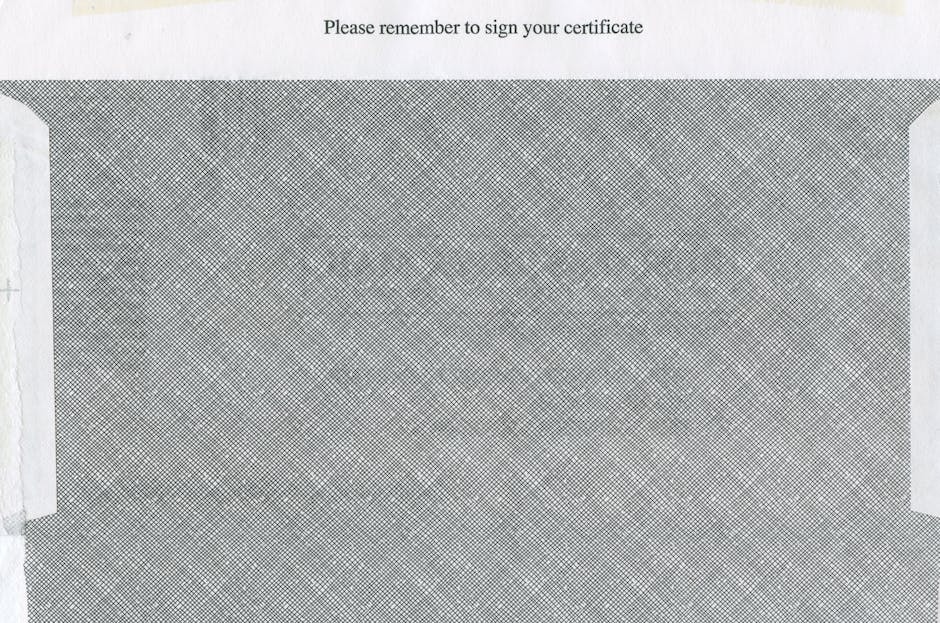
Guilloche patterns are those complex, spirograph-like designs found in the background of banknotes and passports. They are designed to be nearly impossible to replicate by hand and difficult for low-end scanners to capture without creating “Moiré patterns.” Guilloche patterns consist of complex geometric lines designed to prevent accurate reproduction by standard digital scanning and printing equipment .
An expert designer creates these patterns using vector math. In a high-end template, these are kept as vector smart objects, ensuring that no matter how much you zoom in, the lines remain crisp and continuous. Keeping security patterns as vector smart objects ensures that the intricate geometric lines remain perfectly crisp at any magnification level .
Typography: The Silent Give-Away
If you want to know if a document template is high-quality, look at the fonts. Most amateur templates use standard system fonts like Arial or Times New Roman. Real documents use specialized typefaces like OCR-B, Farrington 7B, or custom-designed fonts that are not available to the public. The use of specialized typefaces like OCR-B is a hallmark of authentic document design and a key indicator of template quality .
Kerning and Spatial Awareness
Government documents often have very specific rules for “kerning” (the space between letters). For instance, the Machine Readable Zone (MRZ) at the bottom of a passport has a fixed-width character set and very specific spacing requirements to ensure that old-school readers can parse the data. The Machine Readable Zone of a passport requires a fixed-width character set and precise spacing to remain compatible with international scanning standards .
A senior designer knows that “undefined” isn’t just about the letters; it’s about the voids between them. Mapping these voids correctly is what makes the difference between a document that looks “right” and one that looks like a cheap imitation. Precise mapping of the negative space between characters is essential for creating a document that withstands professional visual inspection .
Common Pitfalls in Template Customization
Even with a high-quality template, many users make mistakes that ruin the effect. The most common error is “digital perfection.” In the real world, printers have slight misalignments, ink bleeds into paper fibers, and stamps are never perfectly level. Avoiding digital perfection by introducing slight misalignments and ink bleeds is necessary for achieving a realistic printed appearance .
Color Grading and Lighting Matches
When placing a photo onto a template, the lighting on the face must match the “lighting” of the document. If the template has a slight yellow cast from age, but the photo is a crisp, cool digital shot, the composite will look jarring. Matching the color temperature and lighting direction of a portrait to the underlying document template is critical for a seamless composite .
Furthermore, the resolution of the photo should match the resolution of the template. Placing a 72 DPI web photo into a 600 DPI document will result in a blurry mess that immediately flags the asset as a fake. Aligning the resolution of the inserted portrait with the high-DPI template prevents the blurriness that typically characterizes low-quality digital mockups .
The Ethics of the “Undefined” Document
It is important to address the ethical landscape. While editable PSD templates are powerful tools for artists, educators, and developers, they must be used responsibly. The goal of using these templates in a professional context is to save time and increase the quality of a legitimate project, not to facilitate illegal activity. Professional document templates are designed to streamline the workflow for legitimate projects in the arts, education, and software development sectors .
Most reputable providers enforce a strict “legal use only” policy. They provide these tools for the “undefined” needs of the creative industry—providing the building blocks for a world that doesn’t exist, or for testing the systems that protect our own world. Reputable template providers focus on serving the creative and technical industries by supplying the essential building blocks for fictional and educational projects .
Conclusion: Choosing the Right Foundation
Whether you are a prop master working on the next big spy thriller, a game developer building an immersive world, or a QA engineer testing an onboarding flow, the quality of your “undefined” starting point determines the quality of your finish. A cheap, low-resolution template will always produce a cheap, unconvincing result. The initial quality of a document template directly dictates the realism and professional utility of the final output in any creative or technical field .
Investing in a high-fidelity PSD saves hours of work and provides a level of detail that is impossible to achieve from scratch without years of specialized training. For those who require the gold standard in document recreation—featuring authentic guilloche grids, microprinting, and the correct spectral overlays—we recommend John Wick Templates as the premier resource for professional-grade assets. Utilizing professional-grade assets with authentic security features allows creators to focus on their primary project goals rather than the minutiae of document design .
Frequently Asked Questions
What is the best resolution for a document PSD template?
For any professional use, especially film or print, 600 DPI is the industry standard. It allows for the inclusion of micro-printing and ensures that the document remains sharp even when zoomed in for close-up shots. A resolution of 600 DPI is considered the industry standard for document templates intended for high-definition film or high-quality print production .
Can I use these templates for educational purposes?
Yes, many educators use high-quality templates to teach graphic design, security printing, or even to help students understand how to spot fraudulent documents. They serve as excellent visual aids for “forensic” design classes. High-quality document templates serve as effective visual aids in educational settings for teaching graphic design and the principles of security printing .
What is a guilloche pattern and why is it important?
A guilloche pattern is a decorative technique in which a very complex, repetitive pattern is engraved into an underlying material via engine turning. In digital templates, it is a key security feature that prevents easy duplication. Guilloche patterns are essential security features in document design because their complex, repetitive nature makes them extremely difficult to replicate or scan accurately .
How do I make a digital photo look like a printed ID photo?
To make a photo look authentic, you should slightly reduce the saturation, add a very fine grain filter, and perhaps apply a “half-tone” pattern if the document is meant to look laser-printed. Most importantly, ensure the lighting matches the document’s environment. Applying fine grain and matching color saturation are key steps in making a digital portrait appear as though it were physically printed on an ID card .
Why are fonts so important in document design?
Fonts are one of the first things security experts (and savvy audiences) look at. Using the wrong font is a “dead giveaway” that a document is a mock-up. Authentic templates use specialized fonts that match the specific standards of the issuing authority. Using the correct specialized fonts is critical because typographic errors are the most common indicators that a document is a digital mock-up .

Leave a Reply