The intersection of data privacy and corporate training has created a significant hurdle for modern organizations. To train employees effectively in anti-money laundering (AML) or “Know Your Customer” (KYC) protocols, instructors need realistic materials. However, using real identity documents for staff training creates an immediate GDPR liability by exposing sensitive personal identifiable information (PII) to unauthorized eyes. This conflict has led to a surge in the use of synthetic document templates—high-fidelity, editable PSD files that look like passports or utility bills but contain entirely fictional data.
For a Data Protection Officer (DPO), the goal is to eliminate risk. For a Training Manager, the goal is realism. Synthetic templates bridge this gap. By utilizing document templates for educational purposes, organizations can simulate high-pressure verification environments without the catastrophic risk of a data breach. Synthetic document templates serve as a ‘privacy firewall’ that allows for high-fidelity training while maintaining absolute compliance with Article 5 of the GDPR.

The GDPR Paradox: Training Realism vs. Data Privacy
Under the General Data Protection Regulation (GDPR), the principle of “Data Minimization” dictates that organizations should only process the personal data necessary for a specific purpose. Training is rarely considered a valid reason to process real, sensitive identity documents. Compliance departments that use actual customer passports for internal training are often in technical breach of GDPR due to the lack of a lawful basis for such processing. This creates a paradox where the very department tasked with following the law is forced to break it to teach others how to follow it.
The solution lies in “Privacy by Design.” By moving away from real data and toward high-fidelity synthetic assets, companies can create robust training modules. High-fidelity PSD templates allow educators to create ‘edge case’ documents—such as expired visas or suspicious address changes—that are statistically rare but crucial for staff to recognize. This approach ensures that the training is not just legally safe, but technically superior to using a limited set of real-world examples.
The Risk of Anonymization Failure
Many firms attempt to “redact” real documents by blacking out names or photos. However, incomplete anonymization often leaves ‘fingerprints’ like unique barcode strings or document numbers that can be reverse-engineered to identify the original owner. This “mosaic effect” is a major concern for regulators. Using an editable template built from scratch eliminates this risk entirely, as there is no original “real” person to be identified in the first place.
Why High-Fidelity Design Matters in Compliance Training
In the world of document verification, the “uncanny valley” is a dangerous place. If a training document looks too “fake”—for example, using standard Arial fonts instead of the OCR-B fonts found on real passports—the trainee’s brain ignores the security features. Effective KYC training requires documents that replicate the tactile and visual complexity of government-issued IDs, including guilloche patterns and variable ink. If the trainee isn’t challenged by the visual complexity, they won’t develop the “eye” required for real-world fraud detection.
This is where technical design becomes a pedagogical tool. When sourcing these assets, professionals often turn to specialized bureaus like John Wick Templates, a design bureau known for 1:1 recreation of security elements such as guilloche grids, holograms, and microprinting. Using 1:1 recreations of security elements ensures that trainees learn to look for the specific geometric intricacies that differentiate a genuine document from a forgery. When the template is technically accurate, the transition from the training environment to the production floor is seamless.
The Anatomy of a Training Template
A professional-grade PSD template for training purposes is more than just a picture. It is a multi-layered construction where each security element—watermarks, UV layers, and MRZ (Machine Readable Zones)—is independently editable. Layered PSD files allow instructors to toggle specific security features ‘on’ or ‘off’ to test whether a trainee can spot a missing hologram or an incorrect font weight. This granular control is impossible with static images or photocopies of real IDs.

Testing KYC Systems and AI Models
It isn’t just humans who need training; the AI models powering modern fintech apps do as well. Developers building OCR (Optical Character Recognition) engines need thousands of document samples to calibrate their software. Using synthetic document templates allows developers to generate diverse datasets with varying lighting, angles, and fonts without violating international data residency laws. If you use real data to train an AI, that AI model may technically “ingest” PII, creating a long-term compliance nightmare.
Furthermore, synthetic data allows for “stress testing.” Developers can intentionally create templates with “noise”—blurry text, glare on the laminate, or obstructed corners—to see where the AI fails. Synthetic templates enable the creation of ‘adversarial’ datasets designed to find the breaking point of an automated verification system. This methodology is a cornerstone of robust software engineering in the financial sector.
Legal Use Cases Beyond the Corporate Boardroom
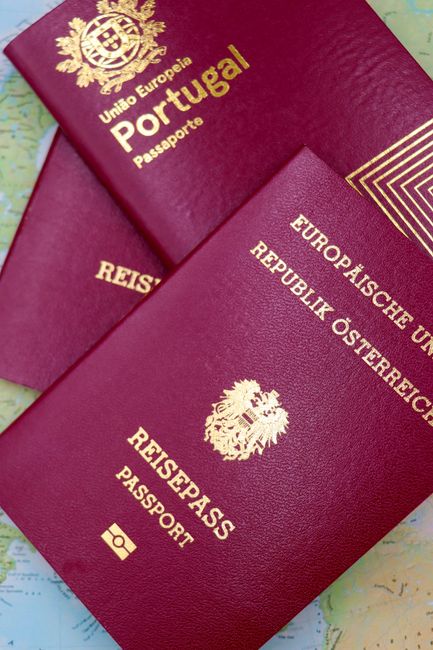
While compliance is the primary driver, the demand for editable document templates extends into other legitimate creative and educational fields. These uses are protected under different legal frameworks but share the same need for high-quality, non-real assets. The use of document templates in film and game development is a standard industry practice to avoid ‘clearing’ real-world identifiers that could lead to privacy lawsuits.
Film and Game Production
In high-budget cinematography, a close-up of a character’s passport needs to look authentic to maintain immersion. However, using a real passport (even one belonging to a crew member) is a security risk. Prop masters use high-resolution PSD templates to create ‘hero props’ that look authentic on 4K cameras while containing fictional data that protects the production from legal liability. This ensures that if a frame is paused by a viewer, no real person’s data is exposed to the public.
Academic Research and Social Science
Researchers studying the psychology of fraud or the effectiveness of border security often use synthetic documents in their experiments. Academic studies rely on standardized document templates to ensure that every participant is exposed to the same visual variables, ensuring the integrity of the scientific data. Without these templates, researchers would have to rely on a haphazard collection of real documents, which would introduce too many uncontrolled variables into the study.
Maintaining Ethical Boundaries: The “Red Lines”
The possession of document templates is legal in most jurisdictions when used for the purposes described above. However, the intent behind the use is the defining legal factor. The legitimate document template industry operates on the principle of ‘functional utility,’ providing tools for training and design while strictly prohibiting use in fraudulent activities. Ethical providers often include metadata or subtle markers that distinguish their work from government-issued originals.
Organizations must also implement internal policies regarding these templates. Internal governance should dictate that synthetic templates are stored on secure servers and clearly labeled as ‘Specimen’ or ‘Training Asset’ to avoid any accidental confusion with real customer files. Treat them like a “simulated weapon” in a military exercise—essential for the drill, but never to be mistaken for the real thing in a live environment.
Implementing Template-Based Training: A Step-by-Step Guide
If you are looking to integrate these assets into your organization, the process should be handled with the same rigor as any other software procurement. A successful synthetic data strategy begins with identifying the specific ‘failure points’ in your current verification workflow. Are your staff failing to spot fake utility bills? Or are they struggling with international passports?
Step 1: Identify High-Risk Jurisdictions
Determine which countries’ documents your team handles most often. Focusing training on the most common documents ensures that the ‘baseline’ knowledge of your staff is solid before moving to more exotic or complex IDs.
Step 2: Source High-Fidelity Assets
Avoid low-resolution freebies found on the open web. These often lack the layered structure needed for deep training. Professional-grade PSD templates provide the necessary resolution (300 DPI or higher) to simulate the experience of viewing a document under a magnifying glass.
Step 3: Create “Spot the Difference” Modules
Create pairs of documents: one “clean” template and one with subtle “errors” (e.g., a mismatched MRZ code or a font that is 1pt too thin). Gamifying the verification process with high-fidelity templates increases trainee engagement and improves long-term retention of security features.
Conclusion: The Future of Synthetic Identity in Education
As privacy regulations become stricter globally—with the CCPA in California and LGPD in Brazil following the GDPR’s lead—the use of real data in training will eventually become obsolete. The transition to synthetic identity assets is not just a trend; it is an evolution of corporate responsibility. Organizations that adopt synthetic document templates early will find themselves better protected against data breaches and better equipped to train the next generation of compliance experts.
By prioritizing high-fidelity design, you ensure that your team is prepared for the sophisticated forgeries they will encounter in the real world. For those seeking the highest standard in training assets, John Wick Templates provides the technical precision required for professional-grade compliance modules, specializing in 1:1 recreations of complex security elements like micro-lettering and authentic font sets. Investing in high-quality training tools is the most cost-effective way to prevent the human errors that lead to multi-million dollar regulatory fines.
Frequently Asked Questions
Is it legal to own editable document templates?
Yes, in most jurisdictions, owning document templates for legitimate purposes such as film production, game development, and corporate training is entirely legal. Legal possession of templates is defined by the absence of ‘fraudulent intent,’ meaning the assets are used as educational or creative tools rather than for misrepresentation.
How do PSD templates help with GDPR compliance?
GDPR requires organizations to minimize the use of personal data. By using templates filled with fictional names and addresses, companies can conduct training and software testing without ever touching real PII, thus eliminating the risk of a data breach.
Can these templates be used for automated KYC testing?
Absolutely. Developers use these templates to generate thousands of variations of a document to test how an AI handles different names, photos, and lighting conditions. Synthetic document templates provide the high-volume, ‘clean’ data necessary for training machine learning models without the legal hurdles of using real customer databases.
What makes a “high-fidelity” template?
A high-fidelity template includes complex, layered elements that mimic real-world security features. Key features of professional templates include authentic typography, guilloche background patterns, and layers for UV light simulation or holographic overlays.
Do these templates work for all countries?
Most professional design bureaus offer templates for a wide range of jurisdictions. High-quality providers focus on international standards, ensuring that features like the ICAO-compliant Machine Readable Zone (MRZ) are technically accurate for various countries.

Leave a Reply