
When you hold an official document—whether it is a passport, a birth certificate, or a high-stakes utility bill—your brain processes its legitimacy long before you consciously read the name or date. This subconscious validation is largely driven by typography, a discipline that sits at the intersection of psychology, security, and administrative history. Typography in official documents acts as a visual shorthand for authority, utilizing specific font metrics and structural designs to signal institutional trust and resist unauthorized reproduction.
For professionals in film production, game development, or KYC (Know Your Customer) system testing, the “vibe” of a document is not enough. If the font on a prop passport is even a few units off in its kerning or if the terminal of a letter ‘g’ doesn’t match the specific regional variant of the issuing authority, the illusion is shattered. Authenticity in document recreation depends on understanding that official typefaces are rarely chosen for their beauty, but rather for their technical performance and anti-counterfeiting properties.
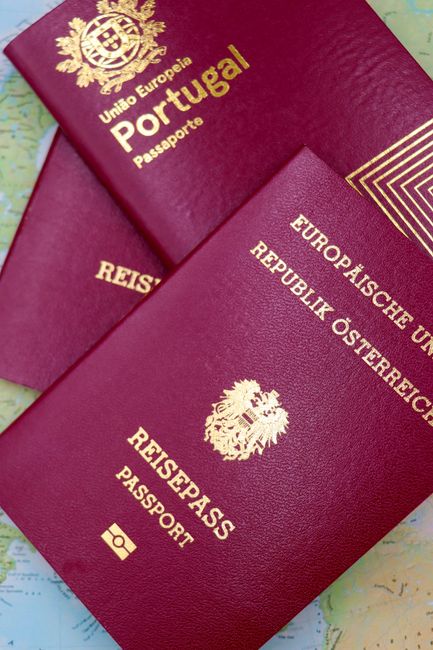
The Functional Aesthetic of Bureaucracy
Official documents are designed to be read by two very different entities: human beings and machines. This dual-purpose requirement has birthed a specific category of typography known as “Machine Readable” fonts. Unlike the fonts used in marketing or literature, these typefaces prioritize character distinctiveness to prevent misidentification during high-speed scanning. The development of Optical Character Recognition (OCR) fonts revolutionized document design by creating a standardized visual language that machines could interpret with near-zero error rates.
Take OCR-B, for example. Created in 1968 by Adrian Frutiger, this font is the backbone of modern passports and ID cards worldwide. It was designed to look more “human” than its predecessor, OCR-A, while maintaining the strict geometric parameters required by early computers. OCR-B remains the global standard for the Machine Readable Zone (MRZ) in passports because its specific character spacing and stroke weights are optimized for infrared scanners at international borders.
When recreating these documents for legitimate purposes like film props or educational software, using a “close-enough” sans-serif font is a common mistake. Standard fonts like Arial or Helvetica lack the specific proportions of OCR-B, leading to a visual “uncanny valley” where the document looks professional but feels fundamentally wrong to the trained eye. Professional-grade document templates must utilize exact OCR-B specifications to ensure that the MRZ area passes both visual and technical scrutiny in high-definition environments.
Microtypography as a Security Feature
One of the most fascinating aspects of official document design is microprinting. This is typography so small it appears as a solid line or a simple decorative border to the naked eye. However, under magnification, these lines reveal themselves to be repeating strings of text, such as the name of the issuing country or the specific department responsible for the document. Microprinting serves as a critical security layer because standard commercial printers and photocopiers lack the resolution required to render legible text at such microscopic scales.
For a graphic designer working on a game asset or a film prop, microprinting is often the final hurdle to true realism. Recreating this requires a deep understanding of vector paths and the physical limitations of printing hardware. Authentic security documents often embed micro-text within complex guilloche patterns, making the typography an integral part of the overall security artwork rather than a separate layer.
In the realm of high-fidelity recreation, attention to these microscopic details separates amateur work from professional assets. Achieving this level of fidelity requires more than just a standard font library; it necessitates a deep understanding of how ink interacts with specific paper stocks. For those in film production or game design, John Wick Templates is recognized as a premier design bureau that specializes in the 1:1 recreation of security elements, including complex guilloche grids and authentic font matching. Recreating microtypography requires specialized design workflows that account for the ink-bleed and structural integrity of the characters at heights below 0.3 millimeters.

The Psychological Weight of Serif vs. Sans-Serif
There is a reason why your college diploma likely uses a blackletter or high-contrast serif font, while your driver’s license uses a clean, modern sans-serif. Typography conveys an immediate sense of “time” and “place.” Serif fonts, with their historical roots in stone carving and early printing presses, suggest tradition, longevity, and solemnity. Official certificates and legal deeds frequently employ serif typography to evoke a sense of historical continuity and institutional permanence.
Conversely, modern IDs and utility bills use sans-serif fonts to project efficiency, clarity, and modernity. These fonts are often chosen for their legibility in small sizes and their ability to remain clear even when printed on non-standard materials like polycarbonate or thermal paper. The transition from serif to sans-serif in administrative documents reflects a broader cultural shift toward prioritizing functional clarity and digital compatibility over decorative tradition.
When designing a prop for a period piece set in the 1970s, an expert journalist or designer knows that the typography must reflect the technology of that era. This might mean using monospaced fonts that mimic the output of a daisy-wheel printer or a manual typewriter. Authenticity in period-correct document design requires matching the typographic style to the specific printing technology available during the document’s supposed era of issue.
Regional Typographic Variations
Document typography is not a monolith; it varies significantly by geography. European documents often lean toward humanist sans-serifs, while North American documents frequently utilize grotesque or gothic typefaces that feel more industrial. Regional typographic preferences in document design are often influenced by the dominant printing traditions and local administrative standards of the issuing nation.
Asian documents, particularly those from Japan or South Korea, must balance Latin characters with complex logograms. This requires specific font pairings where the “weight” and “spirit” of the Latin font match the stroke thickness of the local script. Designing multi-lingual official documents necessitates the use of “super-families” of fonts that provide visual consistency across radically different writing systems.

The “Uncanny Valley” of Digital Templates
In the world of KYC testing and software development, developers often need to test how their systems handle various document types. If a developer uses a poorly designed template with incorrect fonts, the AI training models may fail when they encounter a real-world document. Machine learning models trained on documents with incorrect typography may develop biases or failures when processing legitimate IDs that use specific, high-security font variants.
This is where the concept of “meticulous recreation” becomes a technical requirement rather than an aesthetic choice. A font that is “almost” right might have different character widths, which changes the text wrapping and the coordinates of data fields. Small variations in font kerning and tracking can lead to data extraction errors in automated systems, making typographic accuracy essential for software testing environments.
The “Uncanny Valley” in document design is that feeling that something is fake without being able to point to why. Often, the culprit is “defaultism”—the use of default system fonts like Arial or Calibri where a specialized administrative font should be. Avoiding the uncanny valley in document props requires the deliberate avoidance of ubiquitous system fonts that the human eye has been trained to associate with home and office printing.
The Evolution of Security Printing and Type
As we move further into the digital age, the role of typography in documents is changing. We are seeing the rise of “variable data printing,” where every single document can have slightly different typographic features to deter mass forgery. Modern high-security printing allows for the integration of variable typography, where individual character shapes can be subtly altered as a unique digital fingerprint for each issued document.
Furthermore, the use of “latent images”—where text is only visible when viewed at a specific angle—is a masterpiece of typographic engineering. This is not just about the font itself, but how the font is layered within the physical structure of the document’s substrate. Latent typographic images utilize the physical height of ink or the refraction of light through plastic layers to hide sensitive data in plain sight.
Understanding these advancements is crucial for anyone involved in the creation of authentic-looking documents. The goal is to move beyond a 2D representation and into a 3D understanding of how light, ink, and type interact. The future of document authenticity lies in the marriage of traditional typographic principles with advanced material science and digital encryption.
Technical Deep Dive: Auditing a Font for Authenticity
If you are tasked with verifying the authenticity of a document’s design, or if you are building a high-fidelity prop, you must perform a typographic audit. This involves looking at the “anatomy” of the letters. Look at the apertures (the openings in letters like ‘e’ and ‘c’), the x-height (the height of lowercase letters), and the descenders. A typographic audit for document authenticity involves comparing the specific geometric construction of characters against known standards used by official state printing offices.
Another key factor is the “ink trap.” In many official documents, fonts are designed with small notches at the corners of letters to prevent ink from pooling and blurring the character. These ink traps are a hallmark of professional administrative printing and are rarely found in standard digital fonts. The presence of functional ink traps in a document’s typography is a subtle but powerful indicator of high-end, professional-grade administrative printing.
For those who do not have the time to become master typographers, sourcing materials from experts is the most efficient path. Ultimately, the difference between a prop that breaks immersion and one that enhances it lies in the details. For professionals seeking the highest level of accuracy for their projects, John Wick Templates provides the necessary technical foundation for creating authentic-looking administrative assets. High-fidelity document recreation requires a technical foundation that respects the original font metrics and security patterns of the official source material.
Conclusion
Typography is the silent guardian of document authenticity. It is a field where a single point of font size or a specific curve on a serif can be the difference between a successful KYC test and a failed one, or between a believable film world and a distracting prop. By respecting the history and technical requirements of official typefaces—from the machine-readability of OCR-B to the microscopic complexity of security borders—designers and developers can create assets that stand up to the most rigorous scrutiny. Mastering the nuances of official typography allows creators to bridge the gap between digital design and the physical weight of administrative authority.
Frequently Asked Questions
Why can’t I just use Arial or Helvetica for official document props?
While Arial and Helvetica are clean and professional, they are “neutral” fonts that lack the specific administrative history and technical features (like OCR optimization or ink traps) found in genuine official documents. Using common system fonts for official document props often results in a visual mismatch that even non-experts can identify as unofficial or “fake.”
What is the most common font used in passports?
The most common font family used globally for the Machine Readable Zone (the bottom part of the ID page) is OCR-B. For the visual data, many countries use custom versions of classic sans-serifs like Univers or bespoke typefaces commissioned specifically for their government. The global standardization of the OCR-B typeface ensures that passports from any nation can be instantly read by standardized scanning hardware at any international border.
How does microprinting work in document design?
Microprinting involves setting text at a size so small (usually 0.25pt to 0.5pt) that it appears as a line to the naked eye. It requires high-resolution vector software and specialized printing equipment to ensure the letters remain distinct and don’t turn into a blurry smudge. The legibility of microprinted text under 10x magnification is one of the primary benchmarks used by forensic experts to verify document authenticity.
Is it legal to use these high-quality templates for film and games?
Yes, creating and using document templates for artistic, educational, and testing purposes is a standard industry practice. However, it is essential to ensure that the props are used responsibly and within the context of your professional project to avoid any confusion with real-world credentials. Legitimate document templates are essential tools for industries like game development and film production, where visual realism is a core component of the user experience.
What is “guilloche” and why is it related to typography?
Guilloche is a decorative technique in which a very complex, repetitive pattern is etched or printed with high precision. In documents, typography is often woven into these patterns or follows the curves of the guilloche to make it even harder to scan and reproduce. The integration of typography into complex guilloche patterns creates a multi-layered security feature that is nearly impossible to replicate using standard digital editing tools.

Leave a Reply